Agent orchestration
Lead agent work with clear ownership and proof
Astra or GPT-6 Sol can lead. Astra helps me brainstorm, architect, and plan; assigns qualified workers to execute, test, repair, and deliver; then personally verifies the assembled result before accepting it.
Download Astra Foreman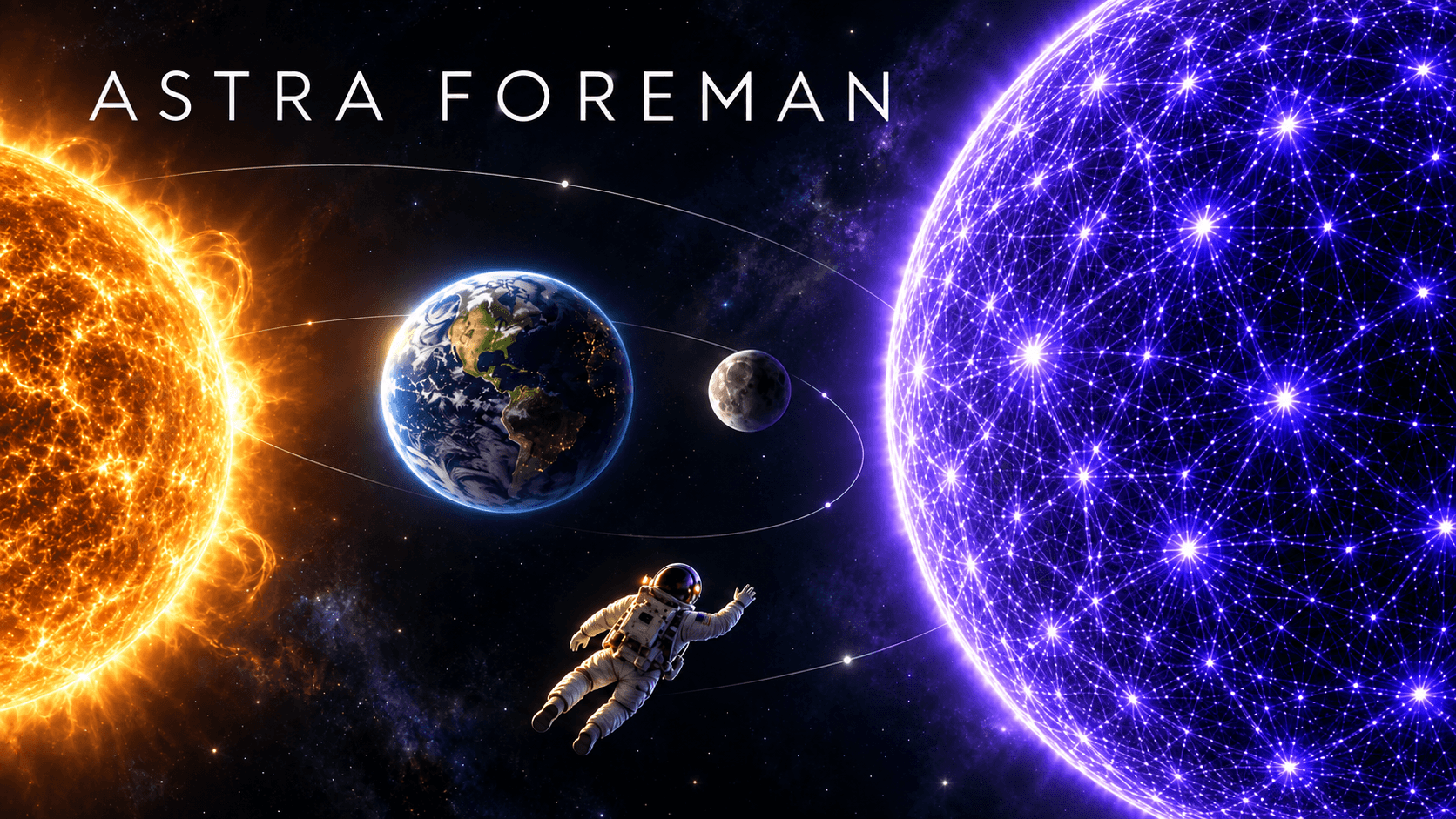
- Rev
- v0.3.0
- Job
- Astra Foreman
- For
- Codex
- Platform
- Codex
- Rate
- Free — members
Astra or GPT-6 Sol can lead a Codex workflow. Astra Foreman keeps planning, delegation, review, and acceptance connected without making the lead a bottleneck. It can challenge the plan across model families early, gives capable workers clear ownership of ordinary execution, asks for independent evidence where it matters, and keeps the acceptance decision with the lead.
Download Astra Foreman
A free Don't Sleep On AI account unlocks the current Codex skill. Review the acknowledgment below before requesting the ZIP.
Download
astra-foreman-codex-v0.3.0.zip
Astra leads the work without taking over every task
Plan the outcome and ownership
Astra starts with the result and its proof, then keeps ownership explicit: the lead steers and accepts while workers own bounded execution.
Challenge the plan early
When an authorized, qualified alternative is available, Astra can ask a different model family to challenge the plan before execution branches out.
Match the worker to the task
Sol can lead, build, and review. Luna handles bounded factual or mechanical work that is easy to verify. The route follows the work and its evidence, not a fixed hierarchy.
Keep review independent
When the scope, risk, or uncertainty warrants it, Astra separates the builder from a fresh review context. Independent evidence strengthens the decision without requiring a panel for every task.
Own the acceptance
Astra does not rubber-stamp PASS or routinely redo every good test. It accepts or redirects the work after checking the assembled result against the original outcome.
 Optional Jev decision support
Jev is optional structured decision support. It can help narrow prioritization and triage. It is not a coding or review replacement. Jev flags possible issues. The lead checks the evidence and accepts the result.
To use Jev, have an active OpenRouter account and API key with available balance. The included helper supports OpenRouter. Jev is also available through Vercel AI Gateway, which needs a separate integration. Enable Jev locally if you want it. You opt in; the agent does not. Do not paste keys into chat. Ask your agent to help configure OpenRouter and verify that a Jev request succeeds.
What Astra Foreman helps you do
1. Plan from the outcome.
Start with the result you need and the proof that will show it is ready.
2. Route bounded work to qualified workers.
Keep routine implementation, testing, and ordinary repairs with the worker best suited to carry them through. Use Luna for bounded factual or mechanical work that is easy to verify.
3. Keep review independent.
Use a fresh perspective to test the evidence before deciding the work is complete.
4. Make the acceptance decision from the evidence.
A green check or a polished report is evidence, not a substitute for the original outcome.
The current v0.3.0 ZIP is free for registered accounts after the server records your acknowledgment.
Questions before you hand work to a crew
What is Astra Foreman?
Astra Foreman is a Codex skill for leading agent work. Astra or GPT-6 Sol can lead. It helps plan the work, assigns qualified workers to execute it, and verifies the assembled result before acceptance.
Do I need Claude or Grok?
No. Codex-only is a complete supported setup. Claude and Grok are optional routes when they are available, authorized, and a fit for the task; unavailable optional providers should lead to a qualified fallback rather than a stalled run.
Where do GPT-6 Sol and Luna fit?
Sol can lead, build, and review. Luna handles bounded factual or mechanical work that is easy to verify. Matching a model to the task does not guarantee lower cost.
Do I approve the lead twice?
No. Astra and Sol honor your stated restrictions, but they do not use Fable Foreman or Opus Foreman's two-yes rule. That rule is only for those Claude skills when they dispatch GPT-6 Astra or Claude Fable as workers or reviewers. Starting this skill does not require two approvals.
Will it automatically accept agent work?
No. A PASS from a worker or reviewer is evidence, not acceptance. Astra personally verifies the assembled result and owns the final disposition; it also does not routinely rerun good tests solely to duplicate their evidence.
Does every task need a panel?
No. Astra uses workers and independent review when the scope, risk, or uncertainty warrants them. A small task can stay with one clear owner; a larger task can add independent evidence without turning every decision into a panel.
Does it guarantee lower cost?
No. Matching qualified models to the work is the design. There is no automatic savings result, and API estimates are not a subscription bill.